
Today’s question is from an officer in Indiana; Would the single purpose container doctrine allow cops to search a vehicle’s hidden compartment? The first thing we want to learn is: What is a single purpose container? The single purpose container doctrine basically says that some containers, due to their shape, weight, size, material and the way that they’re kept, etc., are so telling of what they contain, that a reasonable officer would know that only contraband is inside. In other words, a single purpose container is a container that announces its contents as contraband.
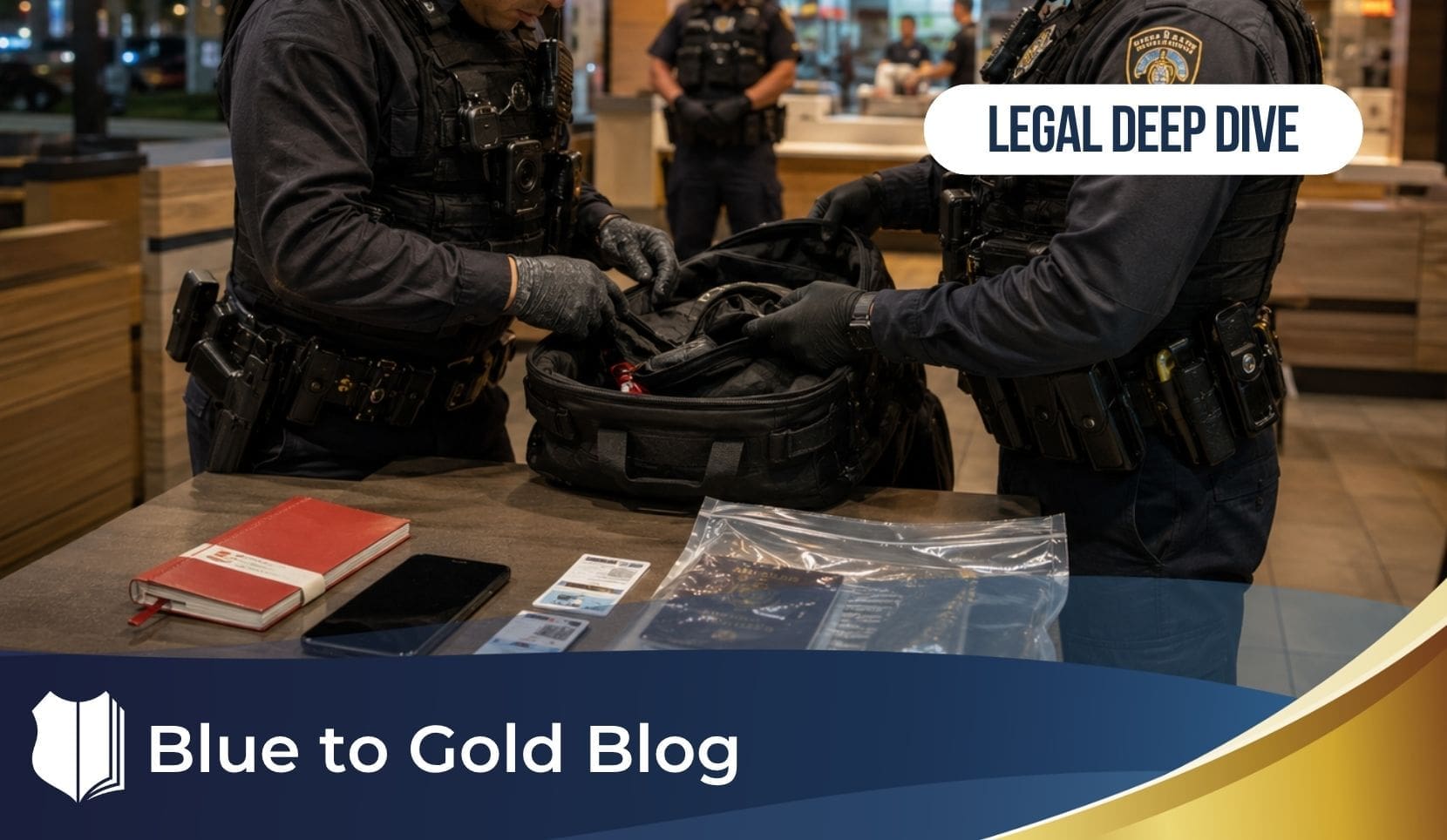
Why is this important? This is important because under the Fourth Amendment, in order to search a container, you usually have to have probable cause plus search incident to arrest; probable cause plus motor vehicle; probable cause plus consent; or probable cause plus exigency. In other words, there is no such thing as searching a container based on probable cause alone. It doesn’t exist, it’s a unicorn.
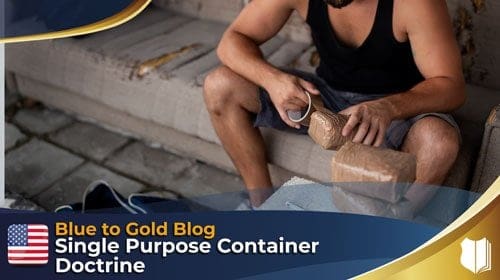
The single purpose container doctrine basically saves some of these searches. The way that the Supreme Court looks at it, is that a single purpose container would not have any privacy interest. Let me give you an example of a single purpose container; a drug package, a brick of cocaine. It’s wrapped up in paper or duct tape and so forth. Can you see inside of it? No. But do you know that it’s packaged in such a way that only contraband can be inside? Yes. Therefore, you don’t need any other reasons to search it.
However, don’t be fooled, because sometimes you’ll have probable cause that a container has contraband inside it, but it’s not a single purpose container. It could also contain something else. For example, there was a case involving a cooler. The cop smelled marijuana fumes emanating from the cooler and the cop opened it and found marijuana. But the problem was that under this situation, the cooler was not near the guy, it wasn’t a search incident to arrest, and it wasn’t part of a motor vehicle. There was no other reason to get into the cooler because it was not a single purpose container. The cooler could have had other things in it, like a bologna sandwich, not just marijuana.
Alright, so now we get to the cop’s question; Would the single purpose container doctrine allow cops to search a vehicle’s hidden compartment? In other words could the hidden compartment be viewed as a single purpose container? The answer is; most likely not. I don’t have any cases on it and I haven’t seen it. But I don’t really see courts, or at least prosecutors applying the single purpose container doctrine to hidden compartments of a vehicle, and for good reason. Frankly, you don’t need the single purpose container doctrine to save the day for vehicle searches. Why? Because the cop is going to have probable cause anyway. And if you have probable cause plus motor vehicle, that is the motor vehicle exception. Why not just use that? Forget the whole more complicated argument about single purpose container.
So that’s really the answer here. We don’t need the single purpose container doctrine to search the hidden compartment because if you have probable cause you have probable cause and the motor vehicle exception.