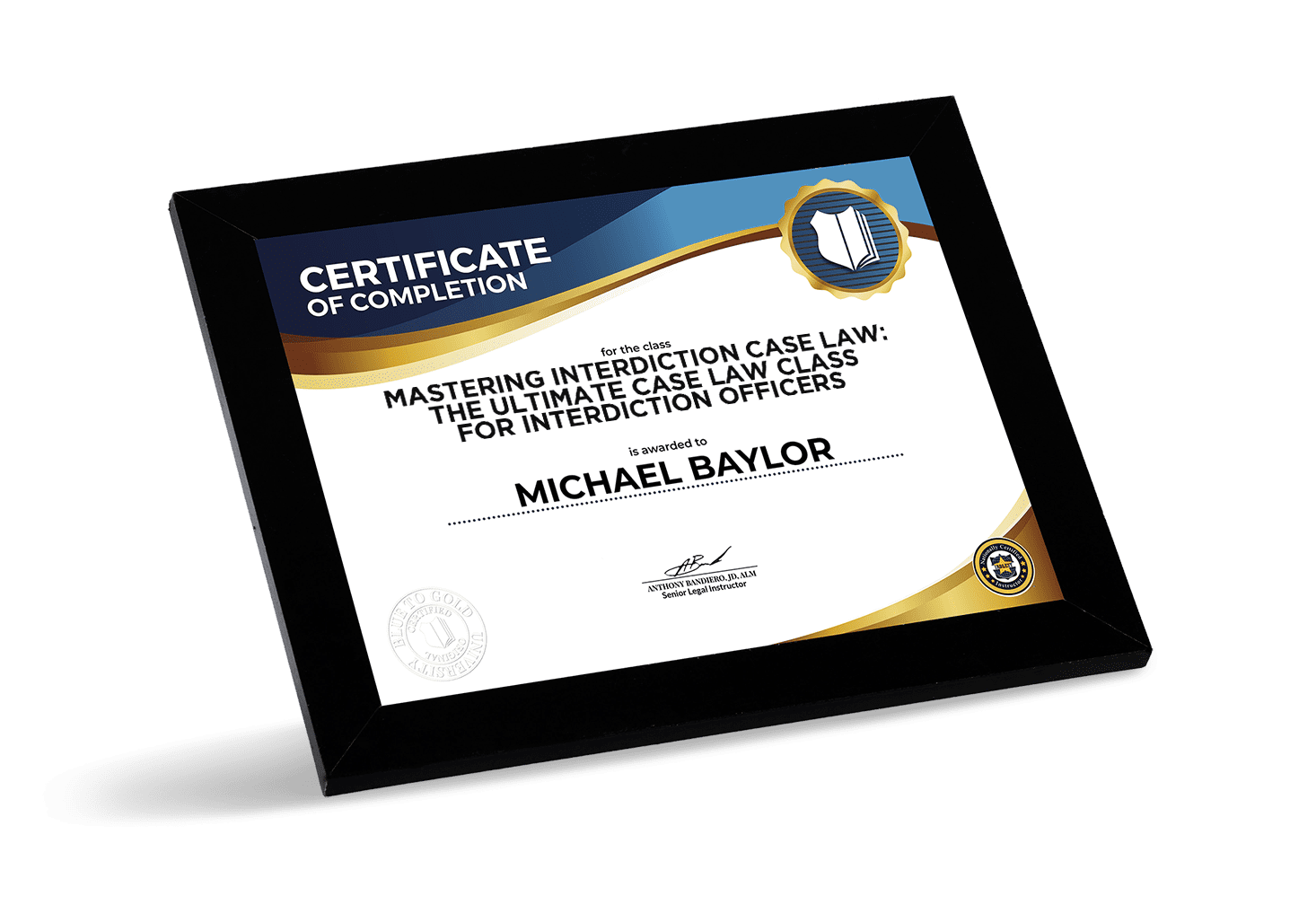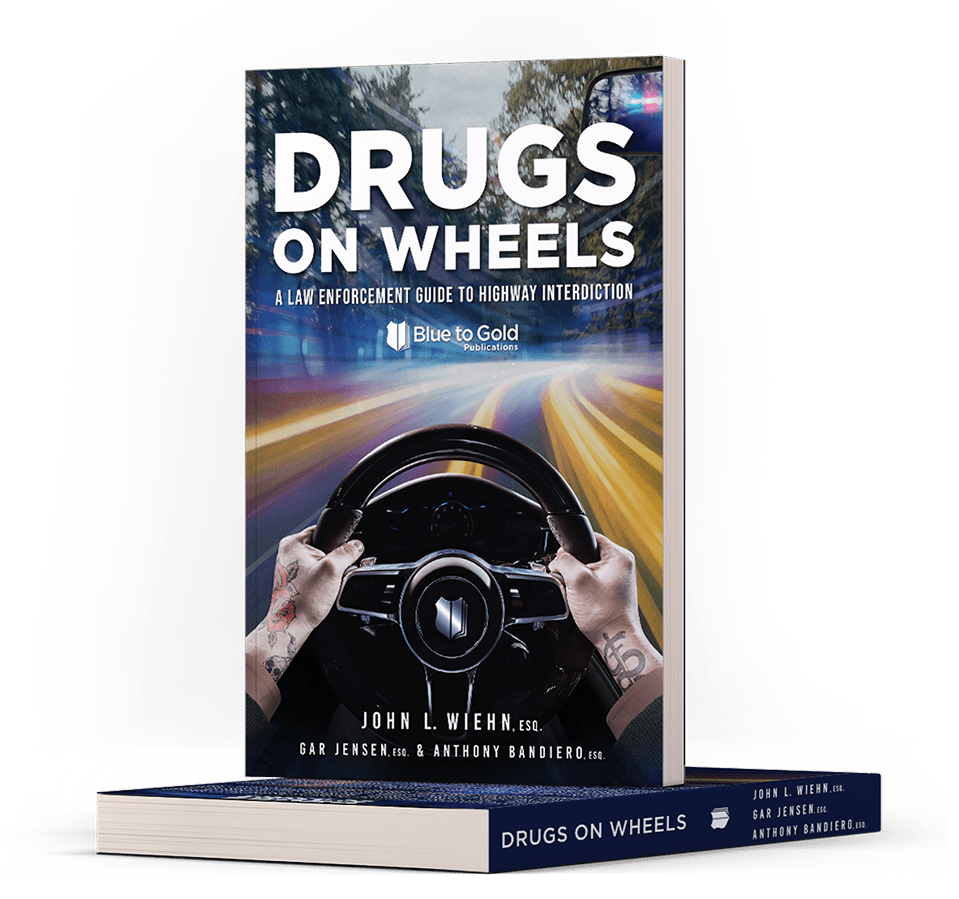
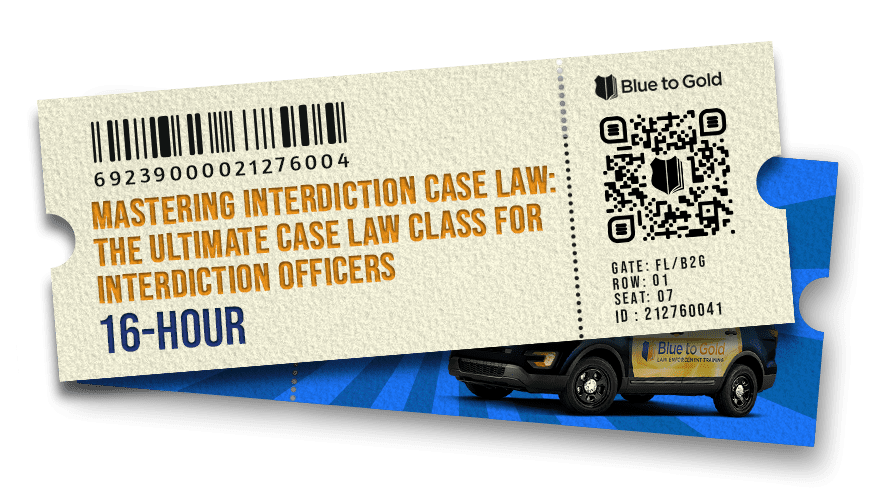
Ultimate Interdiction brings together the best of Blue to Gold’s Drugs on Wheels and Advanced Traffic Stops courses into a powerful, two-day program designed for officers who are serious about combating trafficking. This comprehensive course equips officers with the skills and knowledge needed to identify indicators of trafficking and apply legally-sound interdiction techniques.
No matter an officer’s experience level, this course builds on existing skills while reinforcing legal principles that ensure interdictions are both effective and defensible in court. By integrating real-world case law and proven interdiction strategies, officers will be prepared to stay one step ahead of traffickers.
This two-day, 16-hour training is ideal for task force members, narcotics units, and agencies looking to build a strong interdiction program. Officers who have attended either Drugs on Wheels or Advanced Traffic Stops will find that this course reinforces and expands on those concepts, giving them a comprehensive toolkit for modern interdiction work.
What You’ll Learn
- Indicators of Trafficking
Recognize the behaviors and clues that signal potential trafficking activity. - Legally Sound Interdiction
Apply constitutional principles to ensure stops and searches are effective and defensible. - Search and Seizure Law
Understand the case law that governs searches, seizures, and evidence admissibility. - Interview and Consent Techniques
Develop skills to engage drivers effectively and obtain consent when appropriate. - Highway Interdiction Tactics
Learn proven methods for interdiction on the road, including passenger vehicle stops and commercial carrier scenarios. - Building Ironclad Cases
Gather and document evidence in a way that strengthens prosecutions and withstands courtroom challenges.
By the end of the course, officers will have a complete understanding of interdiction—from recognizing initial indicators to building cases that stick in court. They will be prepared to disrupt trafficking networks while upholding constitutional standards and protecting their agencies from liability.