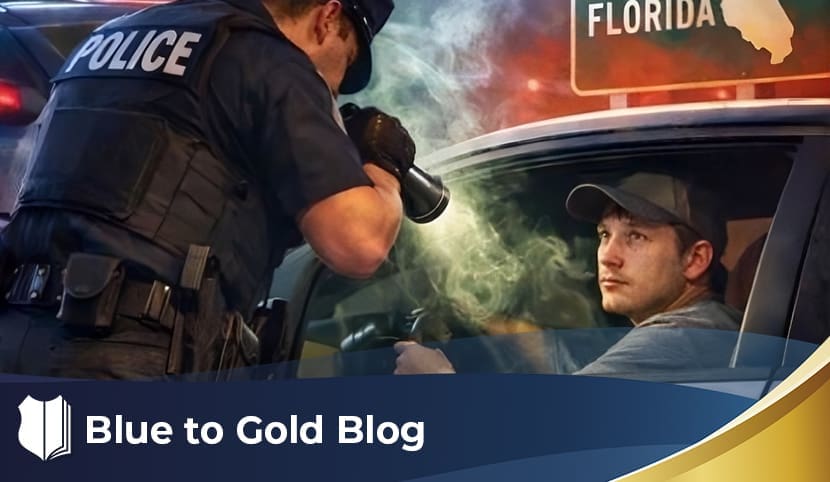
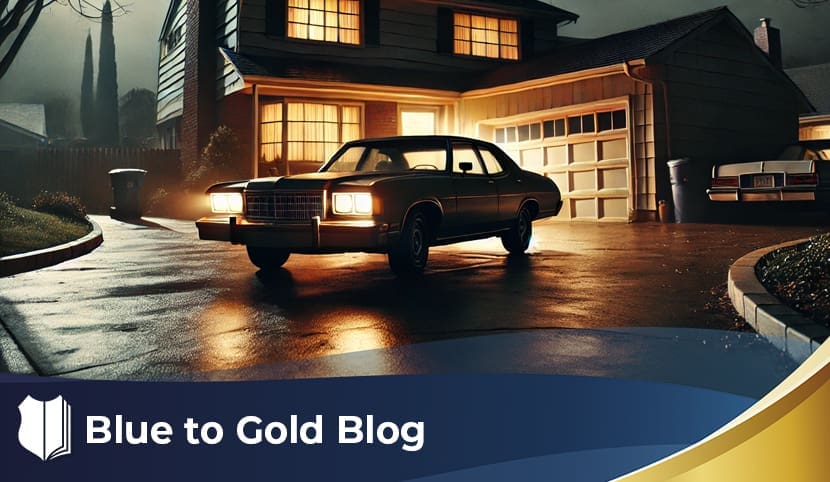

Officers attempt to stop a vehicle, and the stop is initiated before the vehicle reaches a residence. The driver continues and pulls into a driveway. Officers make contact in the driveway and develop probable cause to believe there is evidence of a crime inside the vehicle. The vehicle is now parked adjacent to the home, and the driver either expressly refuses consent or does not clearly consent to a search.
The encounter involves a traffic stop that transitions onto private residential property. The officer has probable cause related to the vehicle but must decide whether the vehicle’s location affects the authority to search it. The legal question is whether officers may search a vehicle located on the curtilage of a home based solely on probable cause under the motor vehicle exception.
Alright, now let’s talk about what the law is. The motor vehicle exception allows officers to search a vehicle without a warrant when they have probable cause to believe it contains evidence of a crime. That exception is based on the reduced expectation of privacy in vehicles and their inherent mobility. However, that exception has limits.
In Collins v. Virginia, 584 U.S. ___ (U.S. Supreme Court 2018), the Court held that the motor vehicle exception does not permit officers to enter the curtilage of a home to search or seize a vehicle. The Court stated, “the scope of the automobile exception extends no further than the automobile itself,” and it does not justify intrusion into constitutionally protected areas surrounding the home. The Court emphasized that a vehicle’s location on curtilage restores heightened Fourth Amendment protection.
Curtilage includes areas immediately surrounding the home that are intimately tied to domestic life, such as portions of a driveway used for parking near the residence. While officers may approach a home under an implied license to knock and talk, that limited license does not create authority to conduct a search.
State courts have applied this principle in similar contexts. In People v. House, 141 N.E.3d 633 (Ill. App. Ct. 2019), the court rejected a warrantless seizure of a vehicle from a driveway based on agency policy, explaining that “police policy is not the Constitution.” The court made clear that neither departmental policy nor probable cause alone authorizes intrusion onto curtilage without a warrant, consent, or exigent circumstances.
Consent can change the analysis. A person may voluntarily allow officers to search a vehicle parked on curtilage. Absent consent, officers must identify a valid exception such as exigency or obtain a warrant. Probable cause alone is not enough once the vehicle is within curtilage.
Alright, with these facts and laws in mind, here is the answer. Even if officers develop probable cause during a lawful traffic stop, they may not rely on the motor vehicle exception to search a vehicle once it is parked on curtilage. If the driveway or parking area is part of the home’s curtilage, officers need consent, exigent circumstances, or a warrant.
Officers should first assess whether the area where the vehicle is parked qualifies as curtilage by considering proximity to the home and its use for domestic life. If it does, a warrantless search based solely on probable cause creates significant suppression risk. If the occupant refuses consent, the constitutionally sound option is to slow the situation down and seek a warrant.
Bottom line: probable cause does not override curtilage protections. When a vehicle is on curtilage, the motor vehicle exception does not apply, and officers should obtain consent or a warrant before searching.