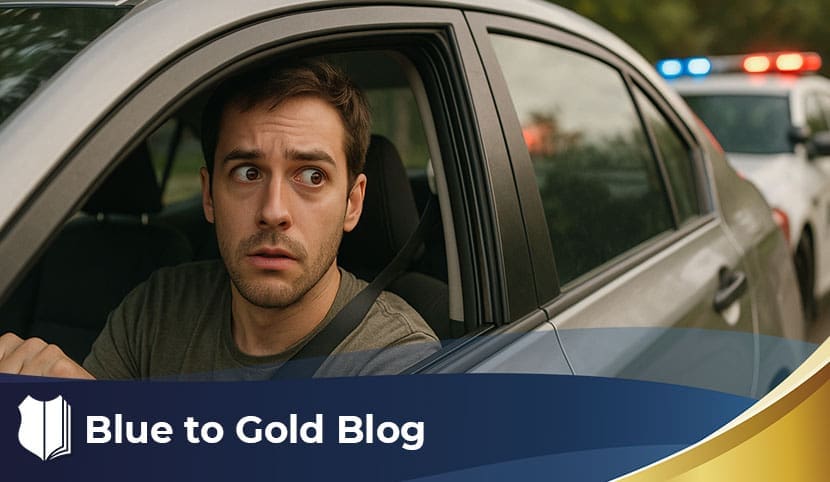

Why Criminals React to the Presence of Police: The Psychology Behind Evasion and Distancing Behavior
In the world of law enforcement and behavioral observation, a common and often telling occurrence is the reaction of certain individuals upon the mere sight of a uniformed officer. Officers patrolling city streets frequently encounter people who abruptly alter their behavior once they make visual contact with law enforcement—turning away, increasing their walking speed, crossing the street, or attempting to discreetly flee the area. This instinctive distancing behavior is more than coincidence or happenstance. It is often rooted in a complex interplay of psychology, guilt, criminal intent, and survival instincts.
The Psychological Trigger: Recognition of Authority
The presence of a uniformed police officer represents authority, accountability, and, for those engaged in criminal conduct, the threat of immediate consequence. When a criminal sees an officer, it may trigger a fight-or-flight response—one deeply ingrained in human psychology. This reaction is particularly acute in individuals who:
-Have active warrants
-Are in possession of illegal items (e.g., firearms, narcotics, stolen property)
-Are on probation or parole
-Are actively involved in criminal behavior such as casing vehicles or drug dealing
The sight of police threatens to expose their actions and bring legal consequences. For many, distancing from that threat becomes a form of self-preservation.
Behavioral Shifts: From Calm to Reactive
A key indicator of criminal intent or consciousness of guilt is a rapid change in demeanor upon observing police. Officers are trained to recognize these shifts:
Pre-Evasion Scanning: The individual looks around in a manner suggesting they are assessing for exits, officer positioning, or witnesses.
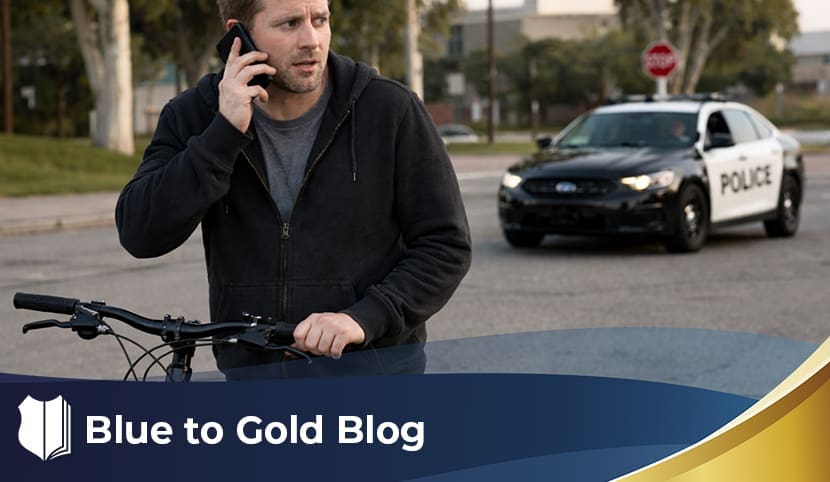
Distancing Movements: Walking away briskly, turning down alleys, boarding buses or bikes suddenly, or entering businesses to create separation.
Disclaimers and Decoys: Talking loudly on the phone about innocent activities (“I’m just going to the store!”) or pretending to tie a shoe near contraband. These are not always signs of guilt, but when combined with other factors—time of day, location, known crime patterns, or prior contacts—they become part of a totality of circumstances that can lawfully draw
officer attention.
The Role of Environmental Context
Criminals don’t operate in a vacuum. The environment often plays a role in how they respond to police presence. High-crime neighborhoods, for instance, create a culture where criminal actors are more alert and reactive. In these areas, suspects may feel the need to constantly “watch their six,” anticipating the next threat—whether from law enforcement or rival criminals.This hyper-vigilance becomes particularly visible when a marked patrol unit arrives on the scene. It’s not just a visual threat—lights, uniforms, and body armor symbolize the end of opportunity and the beginning of accountability.
Real-World Examples
An officer turning a corner may see a group of males loitering near a vehicle. One male, previously relaxed and leaning on the car, suddenly stands upright, pulls his hoodie down, and walks away rapidly without making eye contact. Another looks back over his shoulder and separates from the group. These aren’t just random movements; they’re tactical. Each person is trying to minimize their proximity to the officer and reduce their perceived involvement in any illicit activity.
In proactive policing, such behavioral cues often lead to further investigation. If one of the individuals discards a weapon or drugs during the evasion, that distancing behavior becomes a critical piece of evidence tying them to the contraband.
Consciousness of Guilt
The law often allows juries and courts to consider “consciousness of guilt” as part of criminal prosecution. Evasive actions combined with other factors, especially when unprompted, can be presented as an indication that the suspect knew they were doing something wrong. While not proof of guilt on their own, these actions often support broader investigative findings.
The Tactical Takeaway
For police officers, understanding why individuals react to their presence is a vital skill. It’s not about stopping everyone who walks away—it’s about identifying those whose reactions deviate significantly from normal, lawful behavior that we can reasonably articulate. The ability to reasonably articulate specific behavioral indicators—rather than simply relying on a mere hunch—is what separates good policing from unlawful profiling.
Conclusion
The instinct to flee or create distance upon seeing law enforcement isn’t merely about fear of authority. For criminals, it’s about avoiding detection, arrest, and consequences. It’s an automatic response tied to the knowledge of wrongdoing and the potential exposure that a patrol officer represents. For law enforcement, recognizing these behavioral patterns, understanding their context, and articulating them appropriately is essential in bridging the gap between suspicion and reasonable suspicion—and ultimately building a lawful case.