
Hey guys,
I wanted to take a minute to share a video with you from an incident that is analyzed in our new
Law Enforcement Liability course (https://bluetogold.com/course-description/law-
enforcement-liability/).
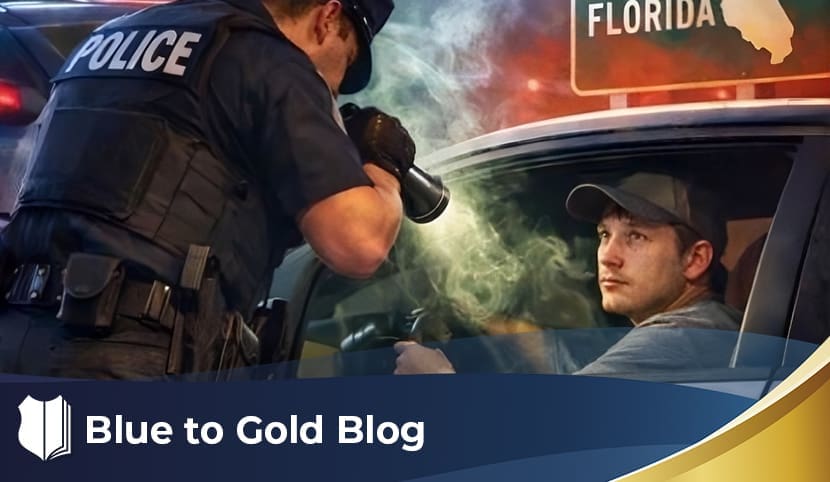
A subject was stopped by a Chicago Police Department tactical traffic enforcement unit for a
seatbelt violation.
The subject ignored repeated commands from officers to roll down his window and exit his
vehicle.
The subject then opened fire on the officers with a handgun, striking one in the wrist.
Every use of force “must be judged from the perspective of a reasonable officer on the scene,
rather than with the 20/20 vision of hindsight.” Graham v. Connor, 490 U.S. 386, 396 (1989).
The use of force “calculus must embody an allowance for the fact that police officers are often
forced to make split-second decisions about the amount of force necessary in a particular
situation.” Graham v. Connor, 490 U.S. 386, 387 (1989).
Unlike the court and those reviewing police use of force at leisure, police officers lack the
“luxury of pausing, rewinding, and playing the videos [of the incident] over and over.” Horton v.
Pobjecky, 883 F.3d 941, 950 (7th Cir. 2018).
It is true that “[w]e must never allow the theoretical, sanitized world of our imagination to
replace the dangerous and complex world that policemen face every day. What constitutes
‘reasonable’ action may seem quite different to someone facing a possible assailant than to
someone analyzing the question at leisure.” Smith v. Freland, 954 F.2d 343, 347 (6th Cir. 1992).
Violence is always ugly, and the ubiquitousness of body cameras among law enforcement
officers now offers a graphic view of the harsh realities in which police officers exist each and
every day. Ignorance regarding the impact of stress on human performance and ignorance of the
legal standards regarding police use of force, combined with the often-visceral response of those
who are unaccustomed to conflict or are pursuing a political agenda, or both, has cost many
effective law enforcement officers their careers.
Nevertheless, body camera footage may constitute the greatest advancement in the history of
police training. If we do not review and learn from these incidents, we do those involved a grave
disservice, the sacrifices made are undermined, and we needlessly increase risk to those officers
who will find themselves in a similar situation in the future.
This incident affords a powerful example of the importance of psychological preparedness and
the danger of deficit of initiative.
Based on their response and ensuing actions, which of these officers were psychologically
prepared; which officers anticipated the threat that suddenly presented itself and reacted
effectively? Which instead displayed a deficit of initiative? Psychological preparedness – the
will to act effectively to neutralize a threat and protect your life and the lives of those around you
– is the single most important factor for an officer to survive an attack.
Briefing Training Video:
https://youtu.be/onQz5Fdpyes
It is my hope that this video will engender valuable discussion and dialogue in your squad
briefings.
If you are interested in more life- and career-saving training, please consider attending our police
use of force course, Response to Resistance: The Legal Realities of Use of Force in Modern
Policing (https://bluetogold.com/course-description/response-to-resistance/), available only to
sworn law enforcement officers.
Until next time, be safe out there – and make good case law!