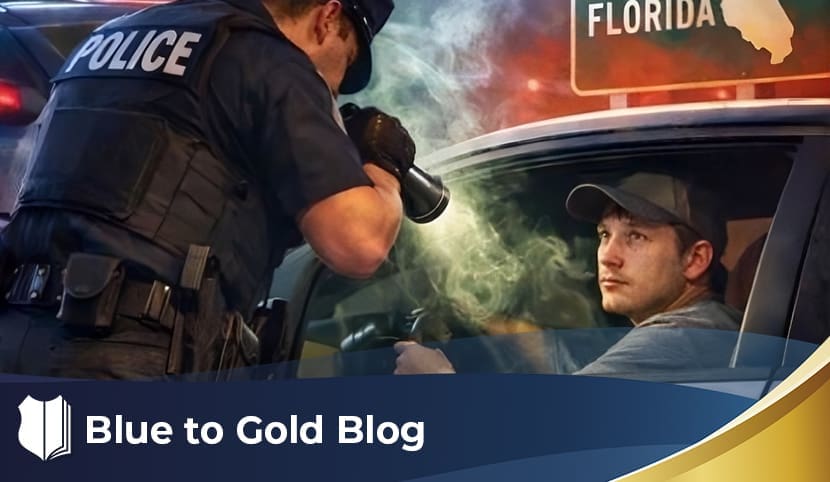
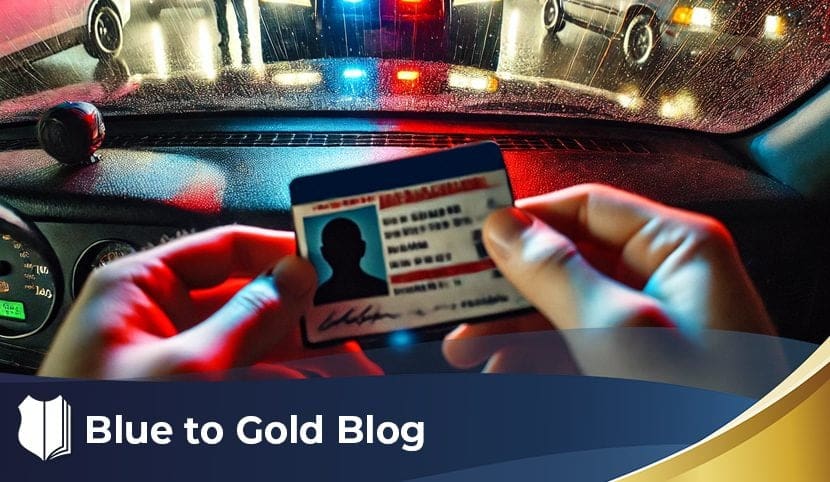

An officer in California runs a license plate and learns that the registered owner has a suspended driver’s license. It is dark and the windows are tinted, so the officer cannot see who is driving. Based on that information, the officer stops the vehicle to investigate a possible violation. When the officer contacts the driver, the driver generally matches the registered owner’s physical descriptors. The driver states he is not the registered owner, claims to have a valid license, and says he has permission to drive the vehicle. However, he refuses to identify himself or produce a driver’s license, insisting he has not committed any crime.
The officer is now faced with a refusal to identify during a stop that began under Kansas v. Glover. The legal question is whether the officer may lawfully require identification or a driver’s license under these circumstances, and what options exist if the driver continues to refuse.
Alright, now let’s talk about what the law is. In Kansas v. Glover, the Supreme Court held that when an officer learns the registered owner of a vehicle has a revoked or suspended license, it is reasonable to infer that the owner is the driver, absent information to the contrary. The Court emphasized that reasonable suspicion is a low standard and that the inference is a reasonable presumption, not a guess. The stop is justified to investigate whether the driver is unlawfully operating the vehicle.
Glover authorizes the stop, but it does not automatically resolve what happens next. The stop is based on reasonable suspicion, not a completed traffic offense observed by the officer. Reasonable suspicion allows detention and investigation, but it does not always trigger the same identification requirements that apply when issuing a citation.
California law does not have a general “stop and identify” statute. Courts have held that a person detained based on reasonable suspicion is not required to identify themselves. Refusing to answer questions or provide identification during a reasonable suspicion stop is not, by itself, obstruction. However, if a person chooses to speak, they may not provide false identifying information.
If, during the stop, the officer develops probable cause that the driver is in fact the registered owner and is driving on a suspended license, the legal posture changes. Probable cause exists when there is a fair probability, based on the totality of the circumstances, that the person committed the offense. Matching physical descriptors, control of the vehicle, and lack of contrary evidence can contribute to that determination.
Alright, with these facts and laws in mind, here is the answer. A stop under Kansas v. Glover is lawful based on reasonable suspicion, but during that phase the driver is not automatically required to identify himself if the stop remains a reasonable suspicion detention. Refusal to identify alone does not constitute obstruction.
However, if the driver matches the registered owner’s description and no facts meaningfully undermine that inference, the officer may reach probable cause that the driver is the registered owner operating the vehicle with a suspended license. At that point, the officer may proceed with an arrest for the license offense. The driver’s refusal to identify does not prevent the officer from acting on probable cause.
If the officer is uncertain whether the driver is actually the registered owner and cannot develop probable cause, the officer may choose to continue investigating through available records checks or may decide to disengage. The Constitution does not require officers to resolve every ambiguity through arrest when probable cause is lacking.
Bottom line: Kansas v. Glover allows the stop based on reasonable suspicion that the registered owner is driving. During that detention, a driver may refuse to identify. If the facts rise to probable cause that the driver is the registered owner with a suspended license, the officer may lawfully arrest. If probable cause does not develop, the officer cannot force identification based solely on the Glover stop.