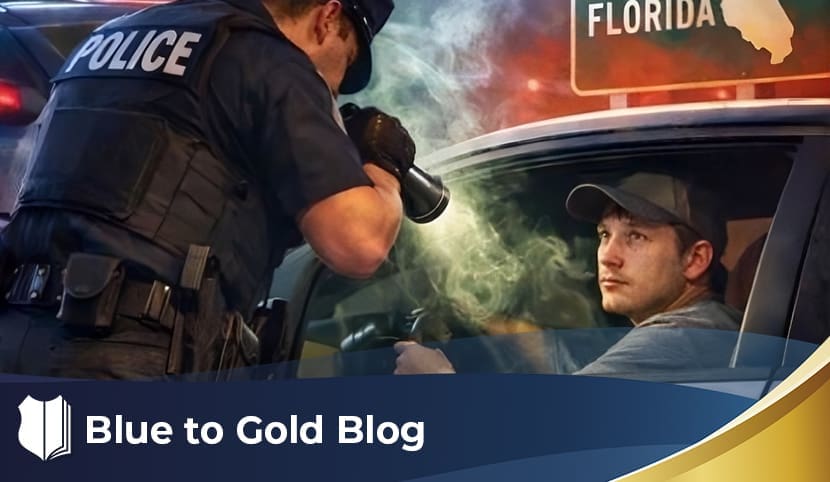
An officer from Illinois describes a situation involving aggravated fleeing or attempting to elude a peace officer, which is classified as a felony under state law. The statute provides that the motor vehicle used in the violation is subject to seizure and forfeiture. In some cases, officers later locate the suspect’s vehicle parked and unattended. Sometimes it is parked on a public street, and other times it is parked in the driveway of the registered owner.
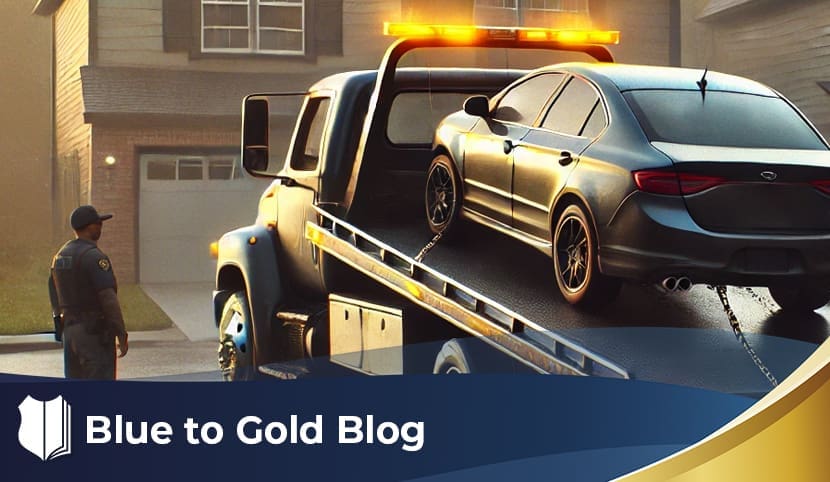
When the vehicle is found in a driveway, officers often attempt to contact the registered owner. Many times, no one answers the door or agrees to speak with police. The officers want to know whether they may tow the vehicle from the driveway as evidence or pursuant to the statutory seizure authority. They also ask whether the analysis changes if the vehicle is parked illegally or lawfully on a public street instead of in a driveway.
This situation involves a completed felony offense, statutory seizure authority, and a proposed warrantless seizure of a vehicle located either on curtilage or on a public roadway. The legal question is whether officers may tow a fleeing suspect’s vehicle without a warrant when it is parked in a private driveway, and whether that authority changes when the vehicle is located on the street.
Alright, now let’s talk about what the law is. Illinois law authorizes seizure and forfeiture of a motor vehicle used in aggravated fleeing. That statutory authority establishes that a vehicle used in the crime may be seized as part of the penalty and as potential evidence. However, statutory authority alone does not eliminate Fourth Amendment constraints on how and where a seizure may occur.
The curtilage of a home receives constitutional protection similar to the home itself. In Collins v. Virginia, 584 U.S. ___ (U.S. Supreme Court 2018), the Court held that the motor vehicle exception does not permit officers to enter the curtilage of a home to seize a vehicle without a warrant. The Court explained that “the scope of the automobile exception extends no further than the automobile itself,” and it does not justify intrusion into constitutionally protected areas surrounding the home.
While officers may approach a residence under the implied license to knock and talk, that limited license does not include authority to repeatedly enter or re-enter curtilage for the purpose of seizing evidence. Plain view does not authorize delayed seizures that require officers or third parties to leave and later return to curtilage absent consent, exigent circumstances, or a warrant.
The analysis differs when a vehicle is parked on a public street. Vehicles located on public roadways are not within the curtilage of a home, and seizure based on probable cause and statutory authority does not raise the same constitutional concerns as entering private residential property.
Alright, with these facts and laws in mind, here is the answer. Officers may have probable cause and statutory authority to seize a vehicle used in aggravated fleeing, but that authority does not automatically allow them to tow the vehicle from a private driveway without a warrant. When the vehicle is parked within the curtilage of a home, towing it would require consent, exigent circumstances, or a warrant. Calling a tow truck that later re-enters the curtilage to seize the vehicle creates a serious Fourth Amendment problem.
Officers should avoid treating driveways like public streets when they are part of a home’s curtilage. The safer and constitutionally sound approach is to secure a warrant if the vehicle is located in a private driveway and no exigency exists. This protects the seizure and any evidence that may later be discovered from suppression.
If the same vehicle is found parked on a public street or other non-curtilage location, the analysis changes. In that situation, seizure based on probable cause and statutory authority is far more defensible, subject to agency policy and proper procedures.
Bottom line: a fleeing suspect’s car may be subject to seizure, but if it is parked in a private driveway, officers should not tow it without a warrant or exigent circumstances. On a public street, seizure is far more likely to be lawful.