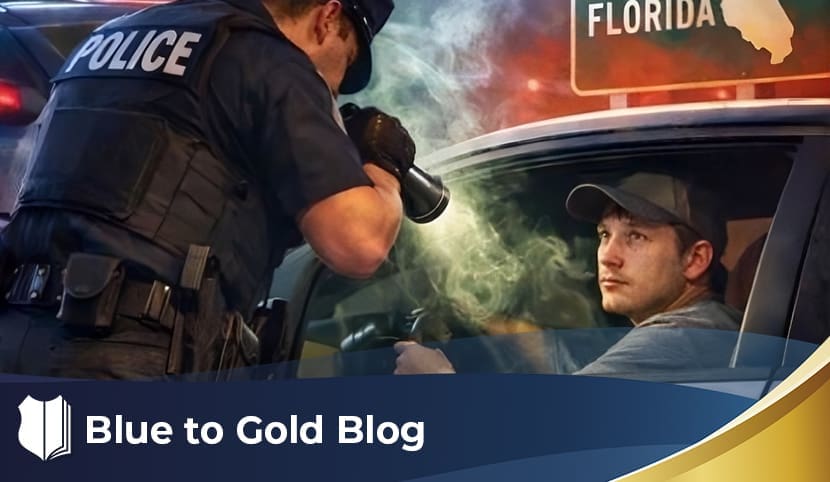


An officer conducts a traffic stop. During the encounter, the officer asks the driver whether there are any firearms in the vehicle. The driver answers yes and explains there is a handgun secured inside a locked safe located in the center console. The firearm is lawful to possess under state law, and the driver appears cooperative, compliant, and licensed. The officer then asks the driver to hand over the firearm. The driver refuses to provide the combination or open the safe. The officer now has a firearm present in the vehicle but locked, secured, and inaccessible during the encounter. The officer wants to know what authority, if any, exists to seize or access that firearm.
This is a lawful traffic stop. The officer has no indication the firearm is illegal. There are no additional facts suggesting criminal activity beyond the traffic violation. There are no specific behaviors suggesting the driver poses a threat. The legal question is whether the officer may lawfully compel access to, seize, or forcibly open the locked firearm container based solely on the presence of a lawfully possessed gun during the stop.
Alright, now let’s talk about what the law is. The presence of a firearm, by itself, does not automatically establish probable cause of a crime. If possession of the firearm is lawful under state law, then there is no firearm offense simply because the gun exists in the vehicle. Probable cause requires facts that a crime has been committed, is being committed, or is about to be committed. Lawful possession defeats that foundation.
Officer safety considerations allow officers to take reasonable steps during a stop when there are specific, articulable facts that a person is armed and dangerous. That standard requires more than mere possession. A firearm that is locked inside a secured container, inaccessible to the driver, does not automatically create an armed-and-dangerous situation. Cooperation, compliance, and transparency weigh against a finding of immediate danger.
Absent consent, officers may not exceed the scope of the stop or forcibly access private containers without legal justification. A locked safe is a protected container. Without probable cause to believe it contains contraband or evidence of a crime, or without a recognized exception, officers do not have authority to force it open. Refusal to provide a combination or unlock a container does not create probable cause on its own.
The scope and duration of a traffic stop must remain tied to the mission of the stop. Officer safety measures must be reasonable and proportional to the facts known at the time. When a firearm is lawfully possessed, disclosed, and secured in a locked container, those facts do not independently justify escalation.
Alright, with these facts and laws in mind, here is the answer. If the firearm is legal under state law and there are no additional facts indicating criminal activity or danger, the officer does not have probable cause to seize the firearm or force open the locked safe. The driver’s refusal to provide the combination does not change that analysis. The firearm being locked and inaccessible undermines, rather than supports, a claim that the driver is armed and dangerous.
The officer may take reasonable safety steps that do not intrude on protected areas. If the officer has legitimate safety concerns unrelated to the firearm itself, the officer may direct the driver out of the vehicle, maintain physical control of the scene, and complete the traffic enforcement task. What should be avoided is treating lawful, secured firearm possession as automatic justification to search, seize, or damage property.
What matters most for articulation is whether there are specific facts showing danger or illegality beyond the mere presence of a gun. Cooperation, lawful possession, disclosure, and secure storage all weigh against forced access. Bottom line: a lawfully possessed firearm locked in a safe, without additional facts, does not give an officer authority to demand access or break it open during a traffic stop.