
Retired FBI Agent and Award-Winning Author Joe Navarro once said that the ability to notice and interpret behaviors requires constant practice and attention to detail; otherwise, the skill atrophies. In the realm of law enforcement—specifically proactive policing tactics—this could not be more true. As a current Sergeant over a proactive vice crimes/crime suppression unit, as well as an active instructor of proactive policing tactics and human behavior on a global scale, I have been fortunate to spend the last 13 years of my police career observing people from all walks of life. Most significantly, I have been able to spend this time studying, documenting, and understanding how individuals engaged in some level of criminal activity react in real time to making visual recognition of a marked police unit.
Over the course of several years, I have spent time studying works of psychology, neurology, human behavior, and the limbic system, and seeing how they relate to police work. I have spent thousands of hours reviewing body-worn camera and in-car camera footage from police interactions with criminals across the United States, to include footage from my own encounters and those of my officers. From those encounters, I began looking for similar patterns and cues that were consistent across the board, no matter where the officer was geographically having the encounter with the criminal.
Throughout these police-criminal encounters across the United States, I noticed that, regardless of the city, state, demographic, population, gender, or any other difference, those engaged in criminal activity were displaying the same behaviors as one another over and over again. Over time, I came to find that much of human behavior is universal. This was also true regardless of the level of crime, with those engaged in lower-level offenses displaying similar—if not the same—behaviors as those engaged in more serious offenses. Based on these observations, it validated what I had learned when studying the works surrounding the limbic system (a.k.a. the human threat response), which I commonly refer to as the freeze, flight, or fight response.
Yes, in that order, because that is how I have seen them play out time and time again on behalf of criminals in my own personal law enforcement experience as well as in observing others’ experiences. In my class, Mastering Proactive Policing for Patrol, we break these levels of the human threat response down in extreme detail, showing what they look like as they are displayed by those engaged in criminal activity in front of police body-worn cameras and in-car video cameras, reacting to police presence in real time.
These displays of human behavior are captured on video as criminals engage in their activities while operating motor vehicles, bicycles, on foot, as well as other forms of transportation. In a type of learning referred to as recognition-primed decision making, law enforcement officers review hundreds of videos of criminals reacting to the presence of a marked unit as well as the behaviors they display during officer contact. As a result, when the officer leaves class, they can’t “unsee” the behavior when it unfolds on the job, giving them the confidence to act on those behaviors and further observe the individual for other cues and indicators shown in class.
Predominantly, officers are shown what Joe Navarro refers to in his book What Every Body Is Saying as pacifying behaviors that are displayed in response to someone experiencing extreme stress and anxiety. Pacifying behaviors and gestures are unconscious self-soothing actions people use to reduce stress, anxiety, or discomfort.
In these cases, the criminal is reacting to the presence of a marked patrol unit and, in turn, is immediately experiencing extreme stress and anxiety due to carrying guilty knowledge that they have just committed, are about to commit, or are actively committing a crime. This can be something as low-level as a traffic violation—such as speeding, no license, or no insurance—or as serious as being wanted for having committed a homicide or a sexual assault of a child.
The pacifying behaviors—those physical things a person does to calm themselves back down—are what we are looking for as police officers to tell us the individual we are observing is experiencing extreme stress and anxiety within. One behavior in and of itself is not very telling, but when the officer observing the individual begins to see them displaying clusters of behaviors, or multiple cues and indicators such as the ones shown in class, it paints a much more accurate picture of an individual engaged in some level of crime at that time. There are numerous cues and indicators that can be displayed by someone experiencing extreme stress and anxiety at the sight of police, so in this article, we will focus on a few key ones I have seen time and time again.
“Looking Busy”
In my training and professional experience in law enforcement, I have watched thousands of individuals engaged in criminal activity react to the presence of a marked police unit in real time. The first onset of when these individuals make recognition of a police officer is the most honest reaction an officer can observe—the entire time. It is subconscious and is a direct result of the limbic system’s “threat response” springing into action before the individual has time to try and manage their behaviors. An officer who understands what this looks like, as well as why it is happening in response to their presence, can open the doors to a whole other level of proactive enforcement toward the criminal element.
In my experience, I have seen individuals react to the sight of a marked patrol unit in some very classic ways. These include some of the following: “the deer in headlights” facial expression with wide eyes, jaw dropped, and a hypervigilant, missile-locked stare at the perceived threat (the officer); coming to an abrupt halt in their movement, consistent with “stopping dead in their tracks” as if they have seen a ghost. After the initial reaction occurs, the behavior that follows is often just as intriguing.
In my experience of observation, after the initial reaction to police presence takes place, those engaged in criminal activity will commonly begin engaging in acts of what I refer to as “looking busy.” Specifically, those engaged in criminal activity who have reacted to police presence do not want to appear as if they are acting suspiciously, looking guilty, or panicking, and will immediately begin carrying out physical acts to “look busy” or “act normal” in front of the police who are now observing them.
No matter what type of transportation is being utilized by the individual, the act of looking busy will show itself. The act of looking busy accomplishes a few things in the mind of the criminal. It creates the perception to the officer observing them that they did not just react to the sight of the officer, but that the movement was actually part of the harmless act they are now carrying out. This is also a coping mechanism for the individual, giving their mind a task to take it off the reality that a perceived threat is in close proximity to them. In many cases, this is also an effort to appear busy and genuinely focused on the task at hand so the officer “doesn’t want to bother them as they go about their harmless business.”
Humans are not good at multitasking. Those who are genuinely focused on a task at hand will appear unaware of the world around them as they carry it out. Those who are only attempting to appear to be carrying out a task while still monitoring the location of the officer will appear abnormal and disingenuous in the eyes of the trained officer observing them. For the trained eye, the more someone attempts to “look busy” and blend in to “act natural,” the more they will stick out.
With that being said, I will give some examples of the most common ones I have observed being displayed by those engaged in criminal activity as they observed police.
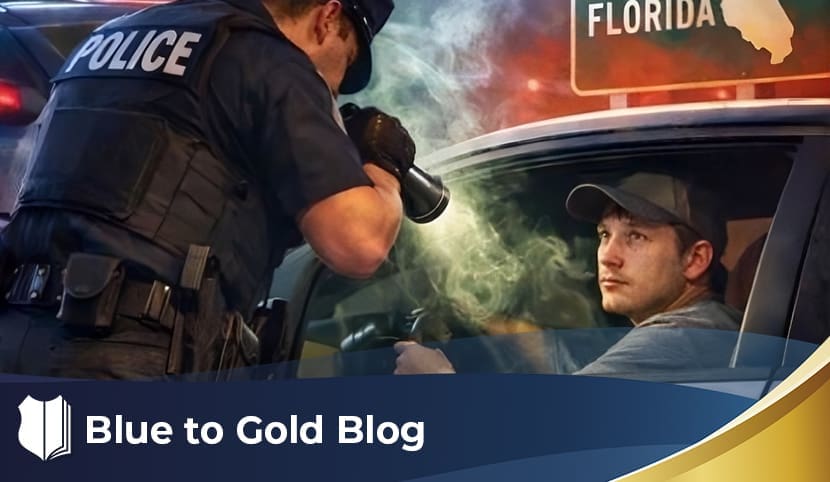
I have seen individuals driving a motor vehicle rapidly decrease speed, pull over off the roadway, exit the vehicle, and begin “checking the tire pressure,” “checking under the hood” as if they are having engine trouble, “pop the trunk” as if they forgot something in there they now need, or “readjust the load” in the bed of a truck to appear as if they pulled off the roadway due to concerns of an unsecured load rather than reacting to police. This is commonly followed by the use of their cellular phone as they attempt to appear to be making a call “due to car trouble.” In other instances, I have seen those engaged in criminal activity begin walking toward their vehicle and, upon seeing police for the first time, now delay getting into the vehicle by carrying out the acts previously described.
With respect to those on foot (which I refer to in class as pedestrian traffic), I have seen other instances of “looking busy” after the initial reaction. In most cases, I have seen those walking on foot who are engaged in some level of criminal activity react by going into a position that Joe Navarro refers to as “turtling,” which is similar to when a turtle sees a threat and tucks its head into its shell for protection.
For humans who do not have a shell to hide inside of, they will try to hide in plain sight, raising their shoulders up and tucking their chin down—similar to hiding in their own shell—as they attempt to minimize head exposure in response to the sight of a threat. In my experience of loss prevention prior to being in law enforcement, I became very good at observing and detecting shoplifters inside stores. They would display the same behaviors I just described as they attempted to “hide in plain sight,” which only made them stick out more as I observed them around other innocent shoppers.
These behaviors will commonly be displayed along with other pacifying behaviors we discuss in class, such as cigarette pacification and eye-blocking, but regarding the act of “looking busy,” the following displays have been commonly observed: kneeling down and pretending to tie their shoes as they continue to minimize head exposure and hide in plain sight as the officer observes them; proceeding to get on their smartphone and burying themselves in it by scrolling and/or making a phone call; appearing to have dropped something on the ground that they then begin looking for intensely. In some cases, I have seen criminals respond by attempting to flag the officer down with “a question or concern” they now have, usually when they feel that being stopped by the officer is imminent. This is done in an effort to appear non-threatening and non-criminal in the eyes of the officer who was just observing them and not expecting such interaction.
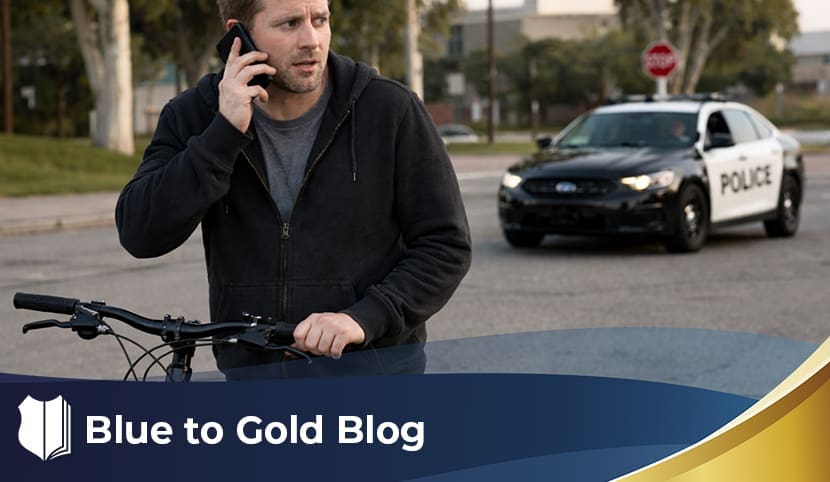
With respect to those engaged in criminal activity who are operating a bicycle, similar displays of “looking busy” will be observed. Most individuals who react to police presence in this instance will immediately get off their bicycle and begin to walk it, using the bicycle as a barrier between themselves and the marked unit’s position. If they do not begin walking the bicycle, they will immediately get off, kneel down, and begin “working on the tire.”
An example I commonly refer to in class from a non-criminal standpoint that helps in better understanding the display of looking busy is the grade-school classroom setting. Many can relate to those moments when a teacher presents a math problem on the board and is now scanning the room to call on someone to answer. In many cases, those students who weren’t paying attention, don’t have the answer, or lack confidence to be called on will commonly bury their head in their paper, appearing to be busy still working on the problem in an effort to avoid being called on while still appearing diligent and hard at work in the eyes of the teacher observing them. I experienced this firsthand in school and can relate.
This example brings up the importance of understanding the perspective of those individuals you are attempting to observe. The better the observer is at seeing things from the perspective of the person they are observing, the more accurately they will interpret the behaviors.