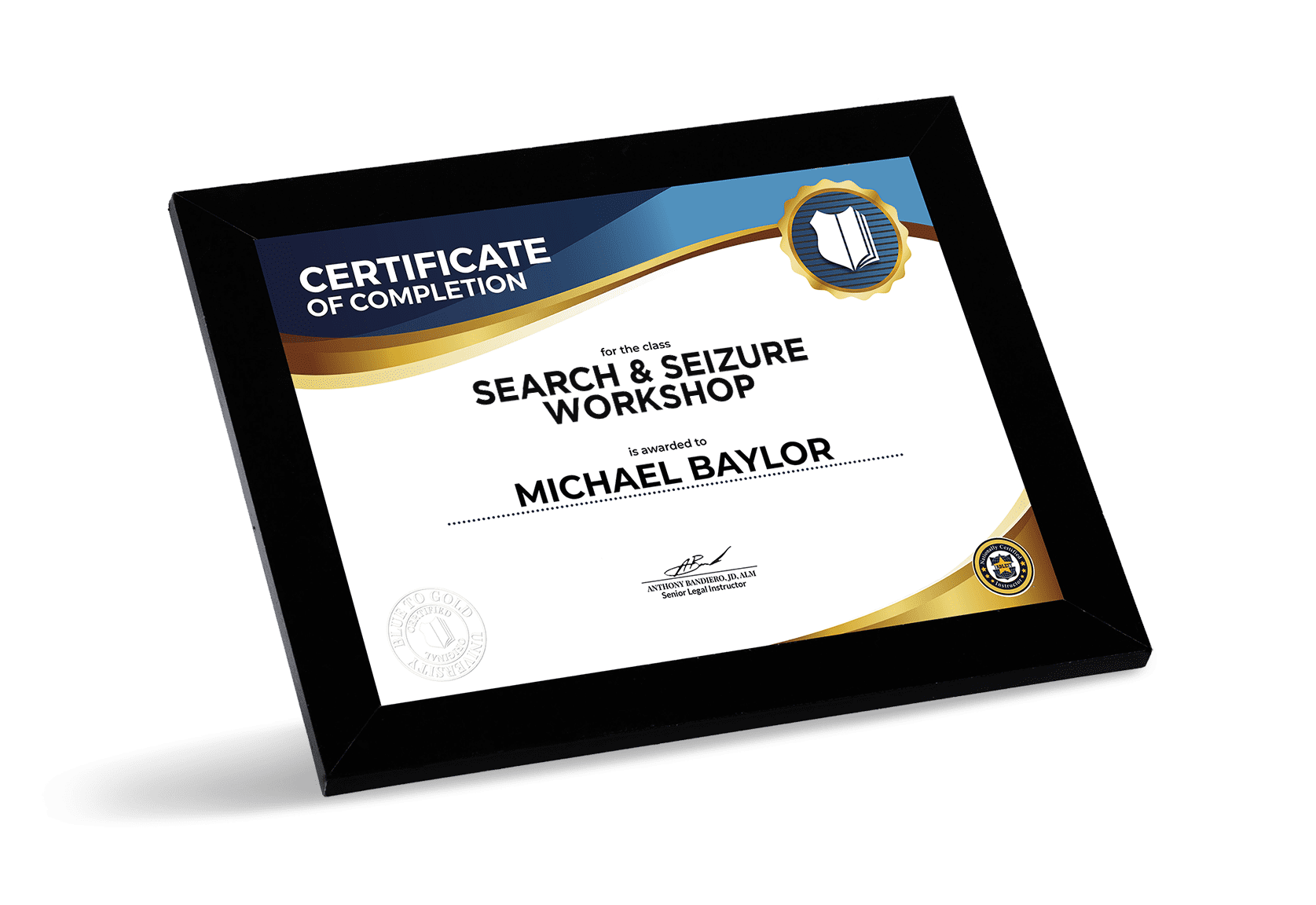

Understanding the Fourth Amendment is essential for law enforcement officers who want to build strong cases that hold up in court. This 2-day workshop takes a hands-on approach, ensuring officers actively engage with the material instead of just sitting through a lecture.
The course uses scenario-based discussions, guided by an instructor who challenges officers with thought-provoking questions and counterarguments. Each session wraps up with a detailed explanation of the proper legal framework, supported by case law, to ensure officers leave with a solid foundation.
By participating fully, officers will reduce the risk of evidence suppression and lower both individual and agency liability.
What You’ll Learn
- Fourth Amendment Protections
Identify which areas and interests receive constitutional protection. - Informant Information
Assess the reliability and utility of tips received from informants. - Reasonable Suspicion and Probable Cause
Understand how to establish the legal grounds for stops and searches. - Searches Incident to Arrest
Know the scope and limitations of these types of searches. - Warrantless Entries
Learn the legal requirements for entering homes without a warrant. - Curtilage vs. Open Fields
Distinguish between protected and non-protected property areas. - Plain View Doctrine
Apply the doctrine properly to avoid evidence suppression. - Consent Searches
Understand the validity and scope of consent-based searches. - Automobile Exception
Define the limits of searching vehicles without a warrant. - Miranda Requirements
Understand when custody and interrogation trigger the Miranda rule.
By the end of the workshop, officers will be equipped to navigate complex search and seizure situations with confidence, making decisions that stand up in court and protect their cases.