
COPS: Think twice before breaking that lock!

An officer conducts a traffic stop. During the encounter, the officer asks the driver whether there are any firearms in the vehicle. The driver answers yes and explains there is a handgun secured inside a locked safe located in the center console. The firearm is lawful to possess under state law, and the driver appears […]
Can You Order Someone to Show Their Hands During a Consensual Encounter?

This issue arises frequently during consensual encounters, where officer safety concerns intersect with Fourth Amendment limitations. The scenario is familiar. An officer initiates contact based on a hunch that criminal activity may be occurring, but without reasonable suspicion. The person is not told they are detained and has not been restrained. During the encounter, the […]
Can Weed Odor Justify a Vehicle Search?

An officer conducts a traffic stop in Texas with multiple occupants in the vehicle. During the stop, the officer detects the odor of marijuana coming from inside the car. Marijuana remains illegal under Texas law. Based on the odor, officers decide to search the vehicle. Without asking for consent and without deciding to make an […]
Undercover Operations and the Sixth Amendment

The Sixth Amendment right to counsel provides that a criminal defendant has the right to the effective assistance of an attorney during all critical stages of prosecution once the defendant has been formally charged. The Sixth Amendment right to counsel is charge-specific, meaning its protections only apply to any formally charged matter. One such critical stage of prosecution […]
Can a Minor Infraction Lead to a Vehicle Search?

Officers in California encounter an illegally parked vehicle at approximately 3:00 a.m. The occupant is inside the vehicle sleeping. Under local municipal code, sleeping in a vehicle is a misdemeanor, but officers typically issue a citation rather than make an arrest. The violation provides lawful grounds for a detention. When officers approach and attempt to […]
Do We Need a Warrant to Use Grabify?

An officer asks whether using Grabify requires a warrant. Grabify is described as a tool that allows an investigator to send a spoofed URL to a suspect. If the suspect voluntarily clicks the link, the tool provides information such as the IP address and browser details. The officer’s concern is whether using this method to […]
Did the 2nd Circuit Allow Police to See Into Tinted Windows With Cell Phones

Officers were serving an arrest warrant at a suspect’s apartment. While at the location, they observed the suspect’s vehicle parked in a parking lot. The vehicle had tinted windows that prevented officers from seeing inside with the naked eye. An officer used a cell phone camera and held it up near the tinted window. By […]
Stop and Frisk on Traffic Stop
Officers lawfully stop a vehicle. While the primary officer is contacting the driver, a cover officer makes contact with the passenger. The passenger is asked whether she has any weapons. She discloses that she has a knife inside her purse and voluntarily hands the knife to the officer. The officer has the passenger step out […]
Patdowns During a Civil Standby

Officers in Nevada respond to a civil standby involving a property dispute. A person was allowed to park and stay in an RV on a friend’s property. The arrangement has broken down, and the property owner now wants the person removed. Officers are lawfully present to keep the peace and address a potential trespass situation. […]
Case Law on Standing

An officer encounters a group of people standing around a backpack late at night. The encounter is consensual. The officer asks whose backpack it is. Each person denies ownership. No one claims any connection to the bag. The officer opens the backpack and finds firearms, narcotics, and identification belonging to one of the individuals. That […]
What Do We Do if We Make Stop Under KS V Glover and the Driver Refuses to ID
An officer in California runs a license plate and learns that the registered owner has a suspended driver’s license. It is dark and the windows are tinted, so the officer cannot see who is driving. Based on that information, the officer stops the vehicle to investigate a possible violation. When the officer contacts the driver, […]
Give Me a Couple of Weeks to Think About It—The Shatzer 14-Day Rule Explained
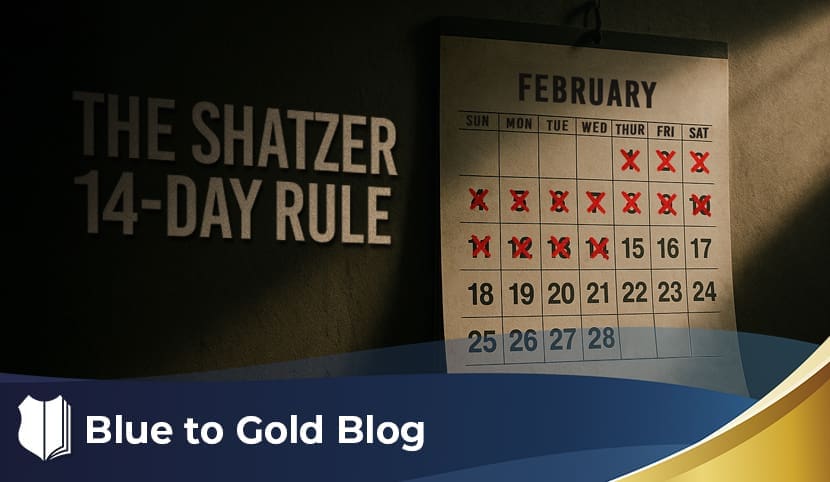
Once an in-custody suspect invokes his Fifth Amendment right to counsel, police are barred from initiating further interrogative efforts on any matter while the suspect remains in custody, unless the suspect has been provided with counsel and counsel is present. Failure on the part of police to adhere to this rule creates an irrebuttable presumption […]
Armed and (Therefore) Dangerous—Rethinking Terry in Light of Bruen/Rahimi?
Under the Fourth Amendment, in order to justify a non-consensual search of a lawfully detained person, an officer must have a reasonable belief the person is “armed and dangerous.” This is the key holding in Terry v. Ohio. Since then, many lower courts have interpreted the Supreme Court’s use of the term “armed and dangerous” […]
Could Police Detain a Driver Suspected for DUI on Their Property?

In a recent discussion about law enforcement and constitutional rights, a fascinating case from Montana brought up some thought-provoking questions about the extent of a police officer’s authority during traffic stops, particularly when a suspect enters their driveway or private property. The key issue revolves around the concept of “curtilage,” or the area immediately surrounding […]
Can You Detain Someone Based on Call They Have a Gun?

Today’s question comes from an officer in California: Can you search a person based on a report that they have a firearm? Scenario A police officer receives a call about a man with a gun. For example, a witness reports seeing someone standing on a street corner holding a firearm. Upon arrival, the officer sees […]